



Your request has to make its way across oceans before it shows up on your screen. Now, just imagine fetching that same content from a nearby timberline server instead. That, in essence, is edge cloud computing and as a result, it is fundamentally revolutionizing website performance in 2026
Instead of being stored miles away in data centers, as is the case with conventional hosting, edge computing puts data and processing nearer to users. It provides instant load times, seamless digital experiences and real-time responses by minimizing latency to within 5 milliseconds for increased conversions and more engaged customers.
Key Takeaways
- Edge computing fundamentally shifts how businesses deliver web content and applications to their users. Key points to be considered by website owners, developers and decision makers are as follows:
- All edge solutions are not created equal, so selecting a provider with robust global infrastructure and managed services delivers maximum performance without the added burden.
- At less than 5 milliseconds of latency, edge computing enables more seamless user experiences that lead to higher conversion rates, lower bounce rates and increased revenue.
- Modern tools have simplified edge deployment, and businesses no longer need to be technically savvy in order to benefit. A vendor like UltaHost offers simple management and setup.
- By moving data processing closer to users, edge computing strengthens threat detection, tightens data access controls, and eliminates single points of failure — all of which directly drive higher uptime.
- Progress in edge AI, 5G and WebAssembly are further extending the capabilities of edge to provide early adopters with long-term advantage.
Don’t let sluggish load times harm your business.
Power your site with UltaHost’s edge infrastructure for lightning fast speeds, rock solid security, and effortless scalability, all without the technical hassle.
Understanding Edge Computing
Edge computing is a significant evolution in how data is handled and moved online and it is offloading the computing resources from a centralized data center to be closer to users, and providing quicker response, more flexible traffic management and better service capacity.
Key features include:
- Processing and storage occurs in distributed edge nodes placed around the globe, and not at a central point.
- Edge makes these quick response times possible by minimizing the number of long network round trips rapidly which can add 50-200 ms of latency through local (or regional) deployment.
- Whereas CDNs focus primarily on caching static content, edge platforms carry out applications logic, serverless functions, AI inference and dynamic processing.
- Sites can do APIs, authentications, and personalized content at the edge without having to hit their origin servers really hard.
- Edge Systems include the global distribution of nodes, intelligent orchestration of workloads, and advanced caching along with edge-side rendering.
The Technical Architecture: How Edge Computing Actually Works
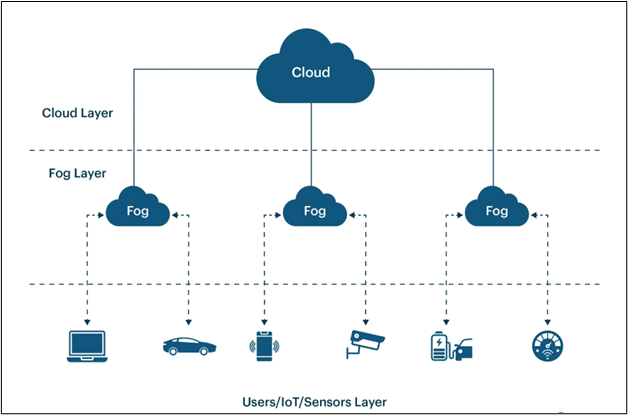
The very architecture of edge computing leads to better performance. It does this by not sending all requests to a single cloud server; instead, the system distributes computing power across strategically located edge nodes.
This model operates on three core principles:
- Edge nodes are usually placed in more than one location, frequently within Points of Presence (PoPs) near internet exchange points and end users.
- Anycast networking based algorithms choose the best edge node for every request by proximity, load, availability and network conditions.
- When edge nodes process and store data close to the user, requests travel a much shorter distance and response times drop significantly as a result.
When a user sends a request, the system forwards it to the nearest edge node, which either serves cached content or triggers a local computation using edge functions — all while maintaining communication with the origin server. Consequently, this lowers latency to below 5 milliseconds. Furthermore, it enables edge nodes to be fully self-contained, executing code, hosting content, and accessing local databases without depending on a central source.
1 Overcoming the Challenges of Distributed Edge Systems
- Employing cache tags, surrogate keys and real time purge APIs to make sure content stays fresh.
- Synchronizing sessions and user data across independent nodes or relying on edge ready databases.
- Tradeoff between availability and consistency under the CAP theorem, with typically lean towards high availability eventually consistent systems.
| Combine edge computing with 5G to unlock ultra fast, real time applications and stay ahead in a market projected to grow from $33.9B to $702.8B by 2033. |
Performance Optimization: The Concrete Benefits for Website Speed
Edge computing allows businesses to achieve tangible performance advantages that, in turn, result in superior end user experiences and stronger business outcomes. Moreover, by streamlining the way data is processed and served, it not only makes websites significantly faster, but also does so at a fraction of the cost and with far greater reliability to boot
1 Latency Reduction Through Proximity
By serving content from nearby edge nodes instead of distant data centers, edge computing directly minimizes network travel time. As a result, delays are reduced significantly, particularly for users who are geographically far from a traditional origin server.
- 20 – 50% less latency than today’s cloud systems
- Caching of assets like images and scripts is now loading faster!
- Live personalization and dynamic page generation with edge functions
- Less than 30 ms response times in places such as South Asia, vs over 150ms from foreign servers
2 Throughput and Bandwidth Optimization
Edge computing also improves data transfer rates and alleviates network congestion, particularly for media rich and complex applications.
- The majority of requests are serviced at the edge
- Brotli, Gzip, and image optimization can decrease file size by 40 – 70%
- HTTP/3, QUIC and TLS 1.3 enhance the performance by enabling up to 20% more stability on unreliable networks
3 Enhanced Reliability and Fault Tolerance
With the distributed architecture, the single point of failure is reduced, and system stability is enhanced.
- The automatic traffic rerouting when node fails
- Uptime enhancements of 99.9 to 99.999 per cent
- Real time health monitoring and adaptive traffic control
- Proactive addressing of the issues to avoid customer facing disruptions
By reducing latency, optimizing bandwidth, and strengthening reliability, edge computing transforms raw technical improvements into tangible business value, faster websites, higher engagement, and more resilient digital operations.
Edge Computing vs Traditional CDN: Understanding the Evolution
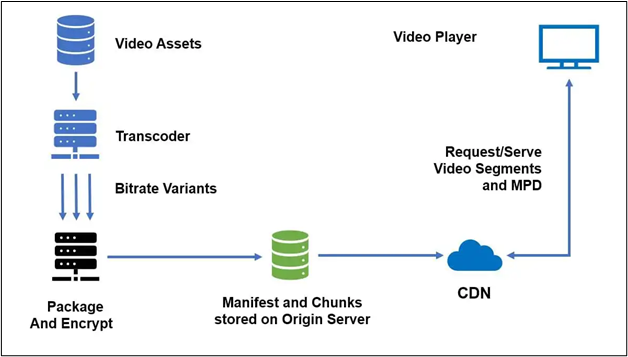
Edge computing and CDNs (Content Delivery Networks) are sometimes used interchangeably but serve different functions. Traditional CDNs make websites faster by storing static content on servers around the world, a concept that now absorbs more than 70% of traffic on the web. However, they cannot do any sort of dynamic processing just pass through pre cached stuff. Uncached or personalized requests must be sent back to the origin server, creating delays especially for modern, API driven websites.
Edge computing extends CDN technology by adding full computing capabilities at the network edge. Instead of only caching files, edge platforms enable:
- Analyzing and transforming live data streams for advanced applications.
- Running JavaScript and WebAssembly through serverless edge functions
- Creating personalized responses in real time
- Handling authentication, database queries, and business logic locally.
CDNs focus on fast content delivery, while edge computing enables intelligent, real time processing at the network edge making it better suited for modern, interactive websites.
Why the Shift to Edge Computing Is No Longer Optional
To be real, the outdated methods no longer suffice. User expectations have skyrocketed, and businesses who are still on legacy hosting or basic CDN setups are beginning to notice the gap. Here’s why transitioning to edge computing has become more of a necessity and less of an upgrade.
Slow Pages Are Losing You Real Revenue
This one’s simple, and the numbers support it. A page that loads in more than three seconds can turn off almost 50% of your visitors before they have a chance to see what you are offering. As a result, companies depending on centralized architectures are slowly bleeding revenue and often don’t understand that it is the infrastructure to blame. But the solution is not more bandwidth. It is operating on data much closer to where the user actually exists.
The Game Has Already Changed
In the past, only large enterprises with deep pockets could afford globally distributed infrastructure. That is no longer the case. Managed edge platforms such as UltaHost allow even small and mid-sized businesses to implement edge-optimized hosting without a dedicated DevOps team. As a result, the performance divide separating big companies from smaller operations is closing more quickly than most people realize. If your competition has already made this move, waiting only makes you even further behind.
Single Points of Failure Are a Real Danger
Beyond speed, there is also the question of reliability and this is where traditional setups have a significant structural weakness. Single-origin architecture: one point of failure that can take your entire site down. Edge systems, by contrast, spread that risk out over dozens of geographically distributed nodes. So, even if one node fails, traffic is automatically redirected to the nearest location (usually within milliseconds and completely transparently for the end user). The end result is a more resilient setup that your customers will never even notice because it just works.
It’s a Marketing Decision, Not Merely a Technical One
What’s more, this is no longer simply an infrastructure debate. As a direct search ranking signals, Google’s Core Web Vitals have introduced real-world loading speed, interactivity and visual stability. A faster site isn’t just a nicer experience, it’s also worth more. So investing in that edge infrastructure goes directly to your visibility, it goes directly into your traffic, and ultimately that’s going to determine your bottom line.” The businesses that internalize this early will take a quantifiable lead over those still considering performance an IT issue rather than a growth lever.
Selecting the Right Edge Computing Vendor for Your Organization
Not all edge platforms are created equal, and choosing the wrong one can be just as expensive as not adopting edge at all. So before you decide, here’s a practical frame to help you do your due diligence with confidence.
Start With Network Coverage
Firstly, check out the provider’s global footprint. Some have only a few PoPs in major metro areas while others provide real global coverage across Asia, Europe, North America and more. Of course, the more extensive and strategically distributed that network is (that is to say, multiple locations around the world), the more consistent those fast load times will be for your users, no matter where in the world they’re seated.
Key questions to ask:
- How many PoPs does the provider have and where are they located?
- Do they have nodes near your primary user base?
- If it is relevant to your growth plans, do they have coverage in emerging markets?
Look for Meaningful Automation
The degree of managed automation that a provider provides also makes a huge difference particularly for teams without dedicated infrastructure engineers. Other platforms ask that you configure cache rules, routing logic, and optimization manually. Then there are the others that do all of this for you, automatically in the background, intelligently adjusting policies and routing traffic without any action from your team. So for most businesses, a fully managed solution is much more practical than some hands on DIY approach.
What does good automation look like in practice:
- Images, CSS, JavaScript and Api responses will automatically be cached
- Intelligent cache invalidation keeping your content fresh without spending time purging manually
- Dynamic image compression and device-specific resizing
- Automatic traffic rerouting on spikes or node failures with no manual intervention
Do Not Overlook Security
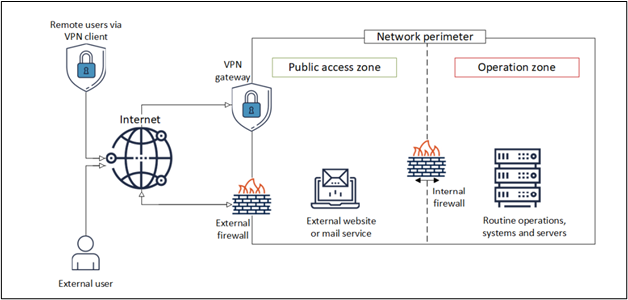
The decision should also lean heavily on security capabilities. As mentioned earlier in this article, edge processing has been proven to increase the attack surface up to a point. However, a robust edge platform makes this a strength and not a liability. In particular, seek out providers that make them standard:
- DDoS mitigation already built in and distributed throughout the network
- Web Application Firewall (WAF) which provides filtering of malicious requests before they ever reach your origin
- Preventing abuse and bot traffic by rate limiting
- Edge TLS/SSL termination to relieve your servers of load.
Collectively, these characteristics ensure threats are contained at the edge which is a considerable enhancement over standard perimeter security deployments.
Transparent Pricing and Real Support: A Must!
Lastly, consider scalability and cost carefully. Edge computing should scale with your business without slapping you with surprise bandwidth charges during a traffic spike. So Look For Providers With Transparent Pricing Tiers And The Ability To Automatically Scale You Up (Or Down) Without Any Manual Work On Your Part. Also, take a look at the quality of support available, meaning whether you’ll be able to access a real human at all hours, or if you’re going to have to search through documentation without assistance.
And the best edge partner isn’t just one that works well from a technical standpoint, they’re a reliable extension of your team. That combination of performance, automation, security and real support is what separates a good provider from the greats
How UltaHost Leverages Edge Computing for Superior Performance
With UltaHost, edge computing is built right into our hosting solution, providing lightning fast secure performance for sites of all shapes and sizes. Our hybrid design allows you the reliability of traditional hosting coupled with the performance of a distributed edge architecture, while not requiring complicated DNS configuration.
Key features of UltaHost’s edge enabled hosting include:
1 Strategic Global Edge Network
- Edge nodes distributed worldwide in Asia, Europe, North America and everywhere else
- Reliable and fast for an international audience
- Hybrid architecture with static content, dynamic caching and edge functions in the edge, while the core applications and databases live on powerful servers.
- There’s no need to modify your apps or manage distributed systems UltaHost takes care of it behind the scenes
2 Automated Edge Optimization
- Automatic cache of images, CSS and JavaScript files
- Automatic and smart caching of database queries, API responses, and dynamic content
- Instant and actual cache invalidation for timeliness and Relevance
- Automatic image compression, and resizing for the device type
- Average bandwidth savings of 40 – 60 % - no compromises in quality.
3 Enhanced Security at the Edge
- Built in DDoS protection distributed across the network
- Threat vector neutralization on traffic prior to reaching origin servers
- Advanced security features, including:
- Web Application Firewall (WAF) protect your site from bad actors and malicious requests.
- Rate limiting to prevent abuse.
- Termination of TLS/SSL to offload the server.
- Sec-bot that weeds out malicious botsgenicDeBotHandleand more.
4 Scalability Without Complexity
- Traffic is routed automatically in spikes or viral,Increased events.
- No manual load-balancing or esoteric DevOps orchestration needed
- No loss of quality, resolution or detail, no matter how far you zoom in!
- On-the-fly performance tuning in new regions without additional deployment
Combined, these features allow UltaHost to provide you with super fast performance, premium security, and unmatched scalability allowing you to grow your website without being held back by a lack of technical know how.
Real World Use Cases: Edge Computing in Action
Edge computing is not just theoretical, it is already showing up in real, practical use cases across industries. In fact, regardless of the sector, it consistently delivers powerful gains in speed, agility, and cost savings. To illustrate this further, here are some of the most compelling examples..
1 E-Commerce: Faster Checkout & Higher Conversions
For e-commerce stores, speed is a dollar figure. Research indicates that a 0.1 second faster site can increase conversions by more than 8%. Edge computing improves each component of the customer shopping journey:
- Cached product catalogs can be delivered almost instantly
- Faster search through edge-side indexes
- Real-time personalization via edge functions
- Low-latency cart and checkout operations
As a result, pages load in under a second, searches feel instant, and cart updates happen without delays. Even a 5% conversion increase can generate hundreds of extra daily sales for mid sized stores.
2 Media Streaming: Smoother Playback & Lower Costs
It requires high bandwidth and low latency for video streaming. In order to improve performance, edge computing serves cached video segments from nearby nodes.
- Quicker load times and less buffering
- Sub second latency for live streams
- About 80-90% decrease to your origin bandwidth.
3 Global SaaS: Consistent Performance Worldwide
SaaS apps have not traditionally handled region specific latency well. Rather than having a stack present at every location, edge computing provides:
- Serving static assets and API responses locally
- Edge based authentication and business logic
- Response times around the world below 100 ms.
Users across the globe experience similar behavior even if the main application is running in a single data center.
4 IoT: Real Time Processing at the Source
IoT systems generate enormous volumes of data so much so that centralized cloud environments simply cannot process it all efficiently. This is precisely where edge computing steps in. Rather than sending every data point to a distant server, it processes information locally, at or near the source. As a result, response times drop dramatically and the system becomes far less dependent on a stable internet connection.
- Real time control and anomaly detection
- Local decision making without cloud delays
- 70 – 90% reduction in bandwidth usage
- Continued operation during connectivity loss
Smart buildings, industrial systems and connected devices grow in speed, reliability and autonomy.
| In e-commerce, streaming, SaaS and IoT, edge computing turns raw infrastructure into intelligent systems, driving unlimited potential for real value in the frictionless future where performance is critical. |
Technical Implementation: Getting Started with Edge Computing
For developers and IT departments, knowing how to implement edge computing makes it far more approachable. Decentralized applications enable developers to use edge based features without requiring expert knowledge of distributed systems, due in part to modern deployment platforms.
1 Edge Functions and Serverless Computing
Edge functions are the most common entry point into edge computing. They are lightweight programs that run on edge servers in response to HTTP requests, delivering faster performance than centralized serverless systems.
Common use cases include:
- Modifying headers, redirects, and URLs
- Handling authentication and access control
- Delivering personalized content at the edge
- Aggregating multiple API calls into one response
- Optimizing and resizing images dynamically
Development workflow:
- Written mainly in JavaScript or TypeScript (with WebAssembly support on some platforms)
- Local environments for testing and simulation
- Simple deployment via Git or CLI tools.
- Built in analytics for performance and error tracking
Edge functions typically respond in 5 – 15 ms, compared to 50 – 200 ms for traditional serverless functions.
2 Edge Caching Strategies
Effective edge caching requires intelligent configuration rather than basic on/off settings. Modern platforms offer fine grained control to match different content types.
Key caching tools:
- HTTP headers that tell the system how long to cache content and under exactly what conditions.
- Labels applied to cached content that enable bulk invalidation of related content
- A caching strategy that serves slightly stale content immediately while fetching fresh content in the background
- Technology that enables caching fragments of dynamic pages separately, allowing personalized and static content to coexist
Best practice:
- Cache static assets for days or weeks
- Cache API responses for minutes or hours
- Use short or no caching for highly dynamic content.
3 Data Consistency and Synchronization
Maintaining consistent data across distributed edge nodes is a major technical challenge. Modern platforms provide tools to manage this efficiently.
Common solutions include:
- Globally replicated key value databases that maintain eventual consistency across edge nodes
- Stateless authentication tokens that any edge node can validate independently, without needing central coordination.
- Client side session information that travels with requests, eliminating the need for server side session storage
- Changes made at one edge node are propagated to other nodes with acceptable delay.
Security Considerations in Edge Computing
Despite its many advantages, edge computing does introduce security challenges that teams need to actively manage in order to mitigate attacks. Here are the key considerations:
1 Expanded Attack Surface
It gives attackers more surface area to probe at the edge though, importantly, any individual compromise affects a much smaller portion of the overall system.
Mitigation strategies include:
- Edge nodes should have minimal permissions and access only to the specific resources they need
- All communication between edge nodes, origin servers, and clients should use TLS encryption
- Teams should continuously patch and update edge infrastructure to stay ahead of emerging vulnerabilities.
- Comprehensive logging of edge node activity enables detection of suspicious patterns or attacks
2 DDoS Protection and Traffic Management
Distributed Denial of Service (DDoS) attacks are natively protected by redundant and traffic load balanced nodes, where any of the nodes can filter out malicious requests.
Modern edge platforms include sophisticated DDoS mitigation:
- Automated detection of malicious traffic patterns with real-time blocking
- Preventing any single client or IP from consuming excessive resources
- Not allowing any sort of traffic from areas where you don’t do business in or known infected sources.
- Using CAPTCHA or JavaScript puzzles to separate humans from bots
3 Data Privacy and Compliance
Edge computing simplifies data privacy compliance by processing data in the required geographic areas to fulfil regulations such as GDPR and CCPA.
Key considerations:
- Keep data within its regulatory environs (i.e., EU data processed at EU nodes as required by GDPR)
- To set up data residency and privacy controls, also partner with compliant providers such as UltaHost.
The Future of Edge Computing: Emerging Trends and Technologies
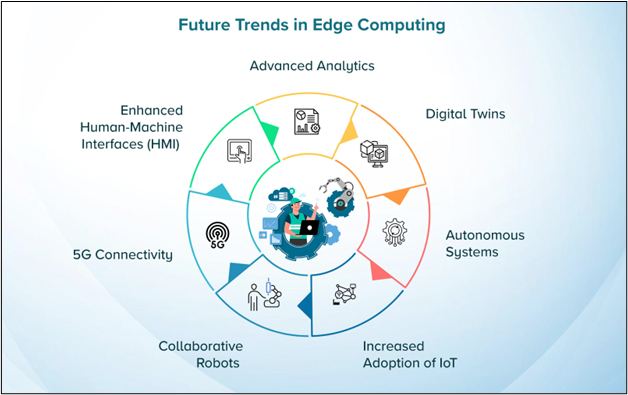
Edge computing is quickly evolving and a few important trends are becoming apparent that will inherently alter webspeed and application capabilities.
1 Edge AI and Machine Learning
Edge AI delivers intelligent, real time processing of data at the network edge to support applications such as image recognition, fraud detection and natural language processing. The Edge AI Market is expected to rise from $1.92 billion in 2024 to $7.19 billion by 2030 due to IoT and 5G growth.
2 5G and Edge Computing Convergence
5G and edge computing are combined to enable real time applications like autonomous driving, augmented reality and remote surgery. By 2025, enterprises will generate and process as much as 75% of their data at the edge, a shift that is already forcing architects to completely rethink how the internet is structured.
3 WebAssembly at the Edge
By managing complex applications at the edge with WebAssembly (Wasm), application managers executing at the edge can achieve fast and optimal execution running close to native speed, further extending capabilities for edge computing.
4 Edge to Cloud Continuum
Eventually, edge and cloud will blend together with workloads placed optimally according to latency and compute needs. These developments will continue to remove the fetters from edge computing, introducing new use cases and driving efficiencies in business.
Your website deserves a faster and more secure web host.
Come aboard with UltaHost and experience the power of edge-enabled web hosting.
From A Web Performance Optimization Standpoint:
Edge computing enhances website performance by handling data closer to users, which minimizes latencies and bolsters real-time responsiveness. This leads to faster load times, more engagement and better conversion rates for businesses.

Final Thoughts
The future of edge computing is here: The not so distant future is no longer really distant at all With its practical power, Edge computing is actively reshaping how developers build and deliver modern websites. As teams push more processing to the edge, they unlock lower latency, stronger performance, tighter security, and greater scalability — all of which combine to drive better digital experiences across every sector.
With AI, 5G and WebAssembly now part of the mix edge will unleash new opportunities to innovate and grow. By opting for a reliable hosting partner such as UltaHost, organizations can capitalize on these benefits of the ease without distraction keeping innovative and differentiating them in the marketplace and able to focus on what matters most: providing great user experiences.
FAQs
What’s the difference between edge computing and cloud computing?
Cloud computing consolidates processing to remote data centers, focusing on scalability and resource sharing. Edge computing distributes compute capability close to the data, thereby reducing latency and allowing real time decision making.
What are common edge computing use cases?
Edge computing is commonly employed in IoT devices, real time analytics, video streaming, adaptive personalization, predictive maintenance, and latency aware applications such as autonomous systems.
Does edge computing improve security?
Yes, processing data closer to where it’s generated means sensitive information travels shorter distances over the internet, and that reduces exposure, which can aid compliance and protect confidentiality.
How does edge computing support IoT environments?
Localizing the handling of IoT data, edge computing minimizes bandwidth consumption, delivers real time response and allows autonomous operation in occasionally connected scenarios.
What are the benefits of deploying edge computing with 5G?
When 5G’s sub millisecond latency is paired with edge computing we have the opportunity to drive real time applications (like AR/VR and autonomous systems) that require fractions of a millisecond instant feedback, and reliably manage local compute power.


