



Here’s a scenario that happens more often than many companies dare admit. The company develops a great product, gets its website up, chooses a hosting plan and that is it. Then, someone on the team poses this question: “Are we really GDPR compliant? And suddenly, nobody is sure.
The General Data Protection Regulation has been in place since 2018. But to this day, it’s still one of the most confusing aspects of running a website — especially for how hosting is affected. And in that misunderstanding can come a very real price.
OK, so let’s try this correctly. No legalese word soup, no fear mongering – just a straightforward, candid explanation of what GDPR will mean for your hosting situation and why it’s important for your business.
Key Takeaways
- GDPR also applies to any company that collects or processes data from EU residents, no matter where they do business.
- GDPR is not just about the privacy policy or cookie banner — your hosting infrastructure greatly influences your ability to store and manage personal data in compliance.
- The level of security controls, isolation and compliance posture differ between shared, VPS, managed and dedicated hosting environments.
- Even with other protective measures, businesses risk compliance without a signed DPA.
- Bringing together your data in transit and at rest protection with monitoring access activity to better enhance not only regulatory compliance but also operational security.
- Responsible data management by businesses frequently brings responsible consumer confidence and stronger relationships within time
Not sure which hosting plan is right for your business?
Explore UltaHost’s full range of plans, built for speed, security, and real growth.
What Is GDPR, and Why Does It Matter in 2026?
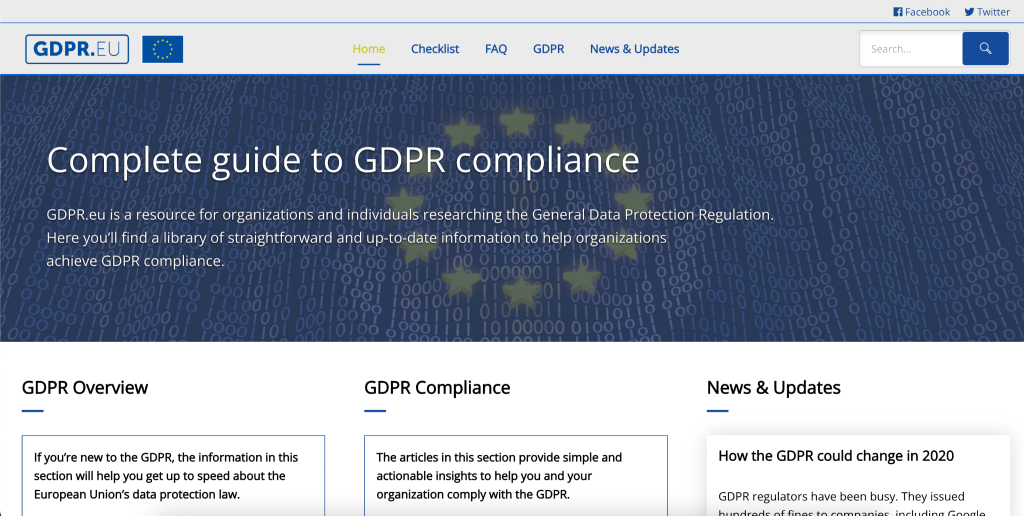
If you’ve ever Googled “what is GDPR and do I need to worry about it with my website,” you’re in good company.
GDPR is short for the General Data Protection Regulation, established by European Union to let people more easily control how companies collect and use their personal data. But here’s the part that’s catching many businesses by surprise: It’s not just for companies in Europe. If your site processes information from EU citizens, even one visitor, the GDPR applies to you.
So this is important from a business point of view. The potential penalties for non-compliance are fines of up to 4% of annual global turnover or 20 million euros, whichever is higher.
| While many organizations prioritize pricing or performance in choosing hosting providers, regulatory readiness is equally critical. Legal exposure was directly affected by infrastructure choices. |
Where Web Hosting Fits in the Scope of GDPR

This is where most businesses are caught off guard. Content creation and marketing GDPR compliance isn’t just about your website’s cookie banner and email-marketing list. It reaches to where and how your data is stored — which, in turn, means your hosting provider.
Your hosting provider is a data processor In the terms of the GDPR. You are the data controller for your business. That’s important since the regulation requires data controllers to agree to work only with processors that are able to ensure their data is protected. Meaning that it’s your obligation to ensure the security compliance of your host.
Additionally, GDPR requires that personal data be kept in the European Economic Area — or it may only be transferred out under certain circumstances. So that’s a compliance gap as well if your hosting company is storing its data on servers situated outside of the EEA, and it is your gap, not just theirs.
This is why choosing the right hosting service isn’t simply a technical choice. It is a legal and business one at that.
GDPR Compliance: Hosting and What Your Provider Really Needs to Provide
If you have been looking for answers to “what should a GDPR hosting provider provide” or perhaps on how you can choose fishing with regard to GDPR compliance, here – you have a bear.
Data Residency and Server Location Transparency
First, data residency options matter. Your service person should be able to tell you precisely where your data is located. If you’re an EU business or service EU customers, then you want servers stationed in the EEA. This eliminates quite a bit of complexity in compliance for international data transfers.
Importance of a Signed Data Processing Agreement (DPA)
Next, a signed data processing agreement — also known as DPA — is non optional. It is required under GDPR. By this agreement, your host consents to become a Processor within the meaning of the Regulation. If you don’t have that and your new one didn’t give it to you, that’s a sign on its own you should resolve sooner than later.
Encryption of Data in Transit and at Rest
Third, opt for hosting providers who keeps your data fully encrypted, both in transit and at rest. Personal information intercepted or breached in the clear is a waiting for someplace to be put in — and under GDPR, breaches must be reported within 72 hours. That’s an extremely narrow window and the business disruption that it creates is being very seriously felt.
Access Controls and Activity Monitoring
Lastly, keep track of who accesses the service and employ access controls. It is important to know who accessed what, and when. Seeing this much, or more, is important not just for compliance but also for being able to respond quickly when something goes wrong.
Selecting the Right Hosting Plan with GDPR in Mind
Hosting environments are not all created equally in terms of compliance. How your data is treated — and how much control you have over it — can be proportionate to the plan you pick.
Limitations of Shared Hosting for GDPR Compliance

Opt for Shared hosting when your site gets plopped on a server with an untold number of other sites. Although more affordable, it also provides you with less isolation and control over your data environment. For companies that deal with large amounts of personal data, shared hosting may not be as secure as GDPR compliance requires.
VPS Hosting as a Balanced Solution for Security and Control

With VPS hosting, however, you have more control and dedicated resources in a virtualized environment. This is to facilitate the execution of the industry specific security required for compliance – from domConfigs in firewalls to encrypted disks. For the entrepreneur, particularly someone who is bootstrapping a business, it’s frequently the sweet spot between price and control.
Managed Hosting in Compliance-Focused Organizations

Compliance-oriented companies are craving the new managed hosting offers. With managed hosting, your provider is in charge of server maintenance, security upgrades and monitoring. This relieves the pressure from your in-house team and takes care of ensuring critical patches are being applied uniformly — which is something that is very, very important under GDPR’s necessity for “appropriate technical” security measures.
Dedicated Hosting for Maximum Isolation and Control

For enterprises with big budgets, dedicated hosting will give you the most isolation and control. With a full server at your disposal, the risk of cross-contamination from other users is removed and you can have your security settings configured as closely to your compliance needs as you want.
| Note: Especially in B2B scenarios, procurement teams frequently demand to see that you’re GDPR compliant before executing a contract. |
A common mistake I often see businesses make is selecting hosting based on price, speed or storage limits only. The truth is, as soon as you begin collecting user data from your visitors, you are already working with your micro-housing provider in compliance framework silence. That infrastructure is where every form submission, login or payment interaction hits. So my advice is simple — get compliance thinking involved early into your hosting selection process.
These are questions that need to be asked — and answered — before you sign up, not after a problem has arisen: How long do you store my data, encrypted or otherwise, and why?

The Business Argument for Getting This Right
Let’s be straightforward about one thing. GDPR Compliance is not just a checkbox. It’s an enterprise weapon and, done right, it is a real competitive difference maker.
Never forget that consumers are more aware of data than his ever been. When consumers see transparent data handling, clear privacy practices and trusted infrastructure behind a brand, they make purchasing decisions. Saying yes with confidence — and documentary evidence — is a business development advantage.
There is the cost of an investigation, a legal team and a PR response; customer notifications; operational disruption. And it will all too frequently come at a cost that vastly exceeds the fine itself. In this instance, it’s far cheaper to prevent the disease than treat it.
Businesses that think of data protection as a value — not just an obligation due to red tape — often have stronger relationships with customers. And more satisfied customers lead to longer retention, higher lifetime value and greater referrals. This is not a difficult business-math equation.
Common GDPR Hosting Questions Every Business Should Understand
These questions are so pervasive in search and client discussions that I thought they’d be worth addressing directly here.
“Does GDPR count for me, if my business is not in Europe?” — Yes, if you gather any data from residents of the E.U. then GDPR applies, even if your business is based outside the European Union. The legislation travels with the data subject, not where the company is based.
“If I have a cookie banner, does that mean my website is GDPR compliant?” — Not necessarily. A cookie banner is merely one aspect of compliance, and the GDPR features remits that go well beyond, such as data storage management, processing agreements monitoring, breach notifications Recap data breach notification requirements Users rights control And others.
Your hosting company should have a system in place to let you know if there’s been an attack right away. And if they don’t, that hole in your DPA is a serious issue.
What to Actually Do Next
One thing is reading about GDPR. Taking action is another. Below is a realistic starting point for companies interested in bringing their hosting environment into compliance.
Begin by auditing what kind of personal information your website gathers, and where it goes. All of these, form submissions, analytics tools, e-commerce transactions, newsletter signups — require personal data. Understanding your data flows is the key to everything.
Then, consider your existing hosting onward. Have you signed a DPA with your provider? If you’re not clear on those answers, that’s the discussion to have with the friend who invited you — or the reason to switch over to a host that can give them clearly.
Next, you need to examine your internal policies. Do you have a written data breach response plan? Do your employees know the basics of GDPR? Are requests to take down user rights like the right to be forgotten done in a process that actually works? They do not exist in a vacuum – they belong side by side with hosting infrastructure and are just as important.
Finally come back to this on a schedule. Becoming GDPR compliant is not a project with an end-date. Regulations change, your data practices change, and your hosting needs change. Incorporating some kind of regular review into your operations is the way businesses stay ahead — not by scrambling to catch up when something goes wrong.
Make Your Hosting GDPR-Compliant?
With Ultahost, get transparent data management, advanced encryption, and reliable hosting environments built for modern regulatory standards.
Final Thought: Compliance Is a Base, Not an End Game
Understanding GDPR in web hosting Ultimately, GDPR when it comes to hosting boils down to a straightforward concept: personal data is a liability, and not an asset. The businesses that get this are likely to manage it better — and profit more.
Your host environment is running in the background isn’t just a detail. It’s core to how your business handles data, keeps users safe and preserves the trust upon which everything else relies. Selecting a provider that takes GDPR compliance seriously is one of the more important infrastructure decisions that an organization can make.
The good news is that you can do a lot to get this right. It means that, with the correct hosting partner and properly worded agreements combined with a good understanding of what you’re committing to from your side, compliance isn’t particularly painful – and there’s more frankly enjoyable work too.
For, you see, businesses that take good care of their customers are those customers want to stick with. And that’s really what this is about.
FAQs
Q) Does GDPR apply to businesses outside Europe?
Yes. GDPR applies to any company that collects or processes personal data of residents in Europe — regardless of where the company is based.
Q) What practical steps should businesses take to improve hosting
No. The right compliance not only builds trust with your customers, it builds your brand and can even serve as a competitive advantage — especially when two businesses interact and one needs their partner to verify that they’re compliant.
Q) Does having a cookie banner make my website GDPR compliant?
No. A cookie banner is only a part of compliance. GDPR also covers data retention and service processing agreements, user rights, breach reporting and the security of hosting providers.
Q) What are access controls and why do they matter to GDPR?
Access controls enable organizations to keep a record of who accessed data and when. The visibility helps with compliance audits and accelerates incident response in the event of security problems..
Q) What practical steps should businesses take to improve hosting compliance?
Businesses should audit data they collected, review their hosting agreements, check their encryption and access controls are in place, execute breach response plans as required and regularly assess practices for compliance


