



Picture all those designer clothes you hardly ever wear hanging in your closet, the one-time-use limited-edition handbag or old laptops, smartphones and video games that remain unused. What if you could convert all that into cash without the hassle of putting up online listings, haggling with strangers or meeting potential buyers? That’s precisely what consignment does.
In the United States, the secondhand market is expected to reach $70 billion by 2027, and it’s growing nine times faster than traditional retail. At the heart of this accelerated growth is the consignment model, which allows for everyone to sell easily while finding affordable fashion that’s good for both individuals and Earth more accessible than ever.
Key Takeaways
- Sellers gets profit from unused goods, stores take on no inventory risk, and buyers get great deals.
- Cloud software, AI pricing and omnichannel tools automate work for you and make it easier to scale.
- Consignment (commission), thrift (donation) and resale (outright purchase of your item) meet different seller and buyer needs.
- High-performance hosting, easy to manage domains and custom made databases all guarantee that your site is online.
- The US secondhand market is exploding, leveraging trends, niche products and intelligent systems..
Get Your Domain and Hosting the Right Way
Start with UltaHost reliable, easy-to-manage domain managment that fits your brand. With affordable hosting.
The Consignment Shop Model
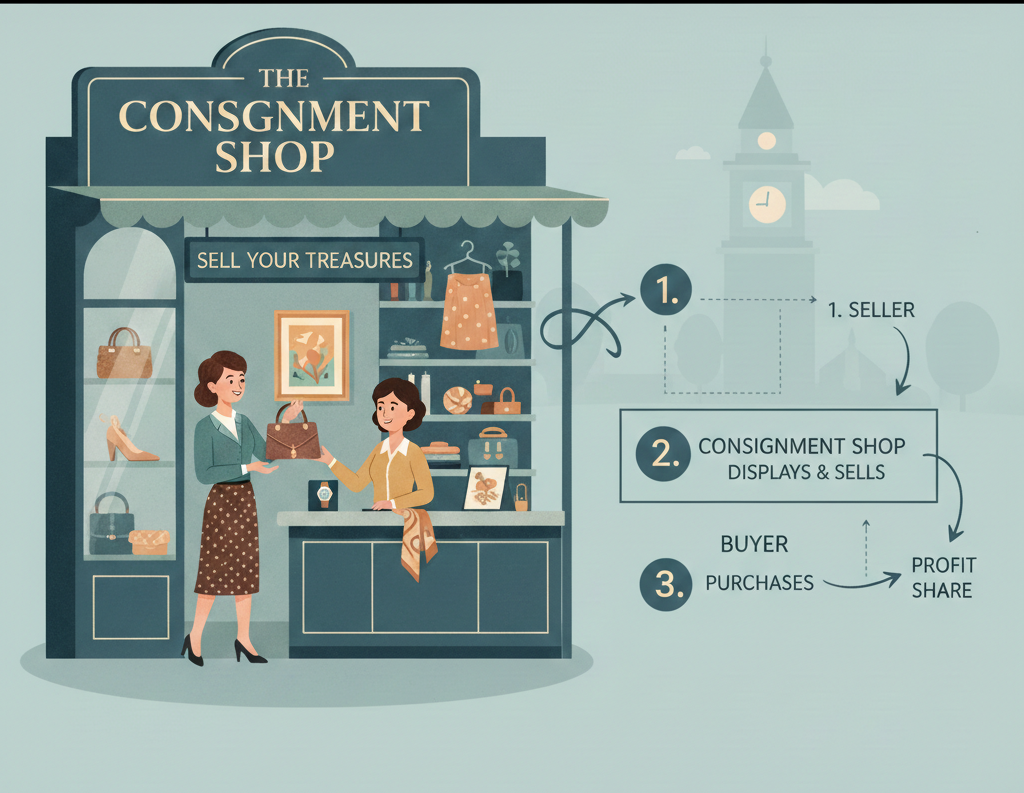
How a consignment store works is quite different from a regular retail store. Rather than buy inventory up front, the store acts as an intermediary between sellers (consignors) and buyers.
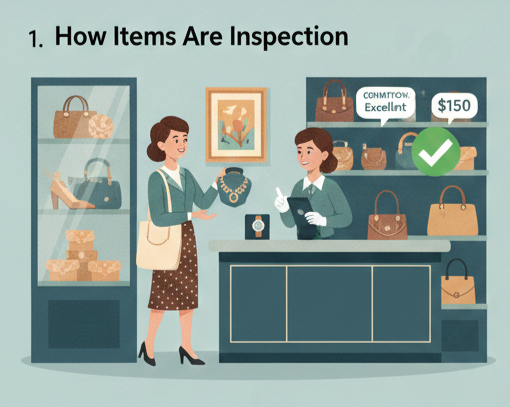
How Items Are Consigned: A Technical Guide To The Process
Inventory Inspection:
It all begins when a consignor drops off items at the store. In this first screening process, store owners or managers go through each item according to some technical criteria:
- State of preservation/quality (condition which might indicate stains, tearing, damage and wear)
- Name recognition and market demand for that particular product
- Seasonal relevance – (many stores will only take items for the next season)
- Store demand for inventory and floor space
- Certification (very important for luxury items in particular)
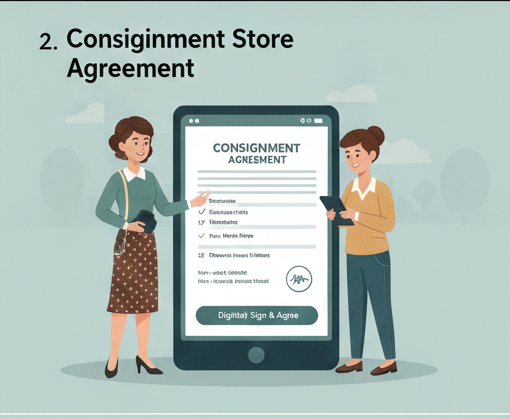
Consignment Store Agreement:
After items are approved, consignment agreement stage initiated. This agreement is the binding contract outlining the terms of the deal as a whole and generally contains sections that include:
- Any kind of additional discounts or markdowns that may occur over an extended period of time.
- How they will price your product (including what their retail structure on pricing is).
- The commission split %
- Length of time they’ll hold inventory (i.e. consignment period).
- When and how you get paid (check, direct deposit or cash).
- What happens to unsold stuff for which they are not able to find buyers.
- Liabilities and insurance in case something happens to your products while there.
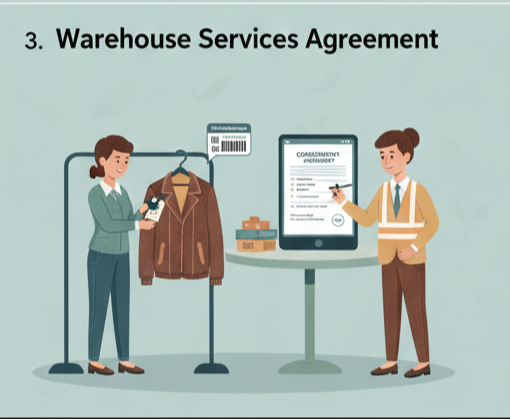
Warehouse Services Agreement:
A warehouse services agreement is exactly what it sounds like. The typical commission split is 60/40, where consignors get 60% of the sale price and the store gets 40%, but this varies widely depending on how established the store is, its location, and what kind of items it’s selling/how in demand they are.
Inventory Management:
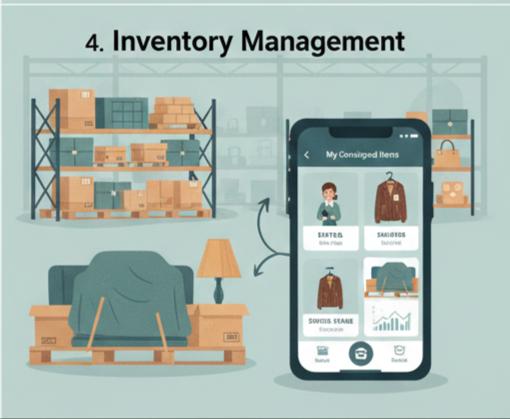
Once the consignment agreement is signed, items enter inventory management. Modern consignment shops use specialized POS systems to track each item, manage consignor accounts, calculate commissions, generate payout reports, mark down aging inventory, and sync data across multiple channels like online, in-store, and social media.
| “The most successful consignment stores don’t try to sell everything they curate aggressively. High turnover matters more than having a large catalog.” |
Benefits of Consignment Store
Consignment stores are unique as they handle work, pricing, display, marketing and customer service, with the consignor waiting for items to sell and periodically visiting the shop to collect payment (usually within 30 days post-transaction).
As A Consignor (The Seller)
- Selling your leftover or unused items without any hassle.
- Ownership remains under your name until sold.
- Bigger market size as compared to individual selling POV.
- Making hard cash from the things you no longer use.
As A Consignee (The Store Owner)
- Low startup cost as you don’t have to purchase the stock upfront.
- Low financial risk as you happen after the item/stock is sold.
- Fixed commission by being the consignor.
As A Customer
- Products are at affordable prices, sometimes you get new or unused items of your desired choice.
- Diverse inventory of items increases interest and fun, exciting discovery experience.
- You get to get a large amount of items under one roof or platform.
Consignment vs. Thrift Stores vs. Resale: The Important Distinctions Explained.
All three are purveyors of used stuff, but their business models couldn’t be more different, and it’s important to understand those distinctions both as someone buying or selling.
Consignment Store:
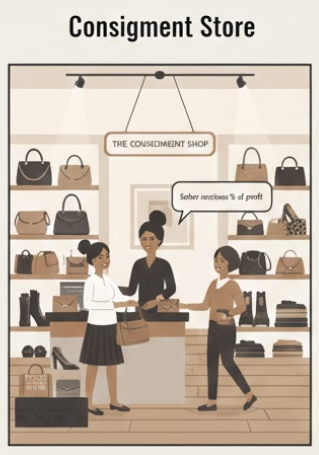
The consignment store sells the items on behalf of the owner, but ownership is retained by the owner until it is paid for. Profits are shared at a predetermined ratio, with any remaining items usually returned to the owner after a certain time period.
Thrift Stores:
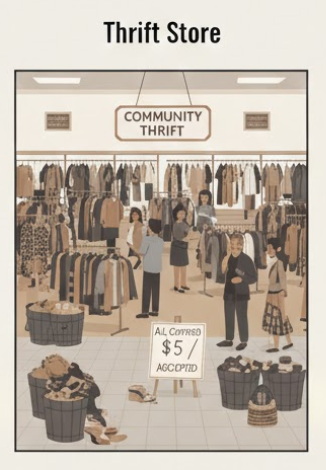
Thrift stores are operated by charities or non-profits to raise money for charitable purposes through the sale of used goods. Inventory is based on donations, so selection can be hit or miss, prices are low and the focus isn’t even necessarily about profit or brand recognition but rather affordability and doing something positive for a community.
Resale Stores:
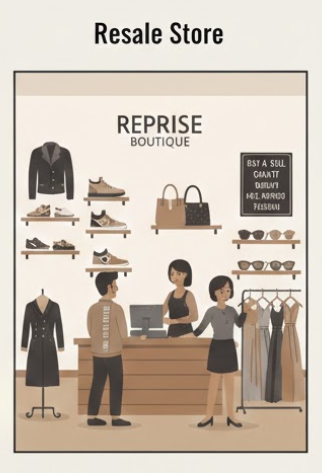
Resale stores purchase items directly from individuals and resell them for profit, with ownership transferring to the store immediately and the seller paid upfront. Because the store invests its own money, items are carefully curated and priced higher than thrift stores but typically lower than consignment stores.
Digitalization: The Game Changer For A Resale Store Industry
The consignment industry is currently undergoing a technological revolution that is altering the very foundation of how these companies do business. These web based programs offer a number of technical benefits that were never possible with desktop software.
- Synchronizing inventory in real time allows for an item to be taken off of online listings immediately when sold in store
- Preventing the all too familiar scenario where a customer tries to buy something that no longer exists.
- Offer sellers 24/7 ability to see how much money they have on their account.
- What items have sold and what payouts are pending. All updates in real time without requiring a phone call or trip to the store.
- Manage all aspects of your consignment stock including inventory management tracking, automatic payments to consignors when items sell and the ability to use them on any device.
Multi location support enables growing companies to scale up without the complexity of running multiple systems for each location. Additionally, these systems can be synchronized with widely used e-commerce platforms such as Shopify and allow consignment shops to operate simultaneously on the ground and online without duplicating work.
| “Manual tracking breaks down fast in consignment. Automation isn’t optional, it’s the difference between scaling smoothly and losing consignor trust.” |
Starting Your Online Consignment Store
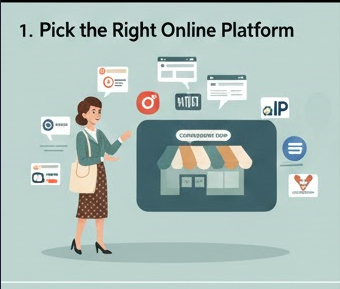
Step 1: Pick The Right Online Platform
- If you are online only, as a starter you might look at platforms such as Shopify, BigCommerce or WooCommerce.
- For integrated consignment management, review SimpleConsign or ConsignCloud ($99–$300 per month).
- Find platforms that grow with you and support multi-channel sales (e.g. website and social media marketplaces).
Step 2: Set Up Inventory Management Processes
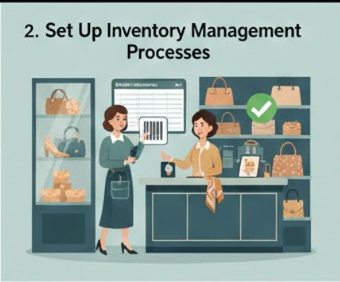
- Develop a transparent route for items coming in: photo, description, condition, price.
- Decide how you will handle:
- Item aging & markdowns
- Unsold items (return, donate, or discount)
- Seasonal rotations
| Note: Take 3–5 professional photos per item with consistent lighting; categorize items as excellent, good, or fair to set buyer expectations. |
Step 3: Build A Professional Online Presence
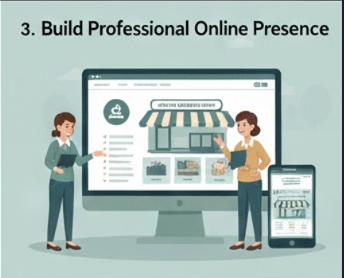
- Mobile-friendly websites and checkout are a must.
- Ensure images and descriptions are clear and searchable.
- Consider social media integration (Instagram Shop, Facebook Marketplace, Poshmark) for extra exposure.
| “Your website doesn’t have to be complicated; focus on a clean design, fast load times, and easy checkout.” |
Step 4: Implement Payment and Payout Systems
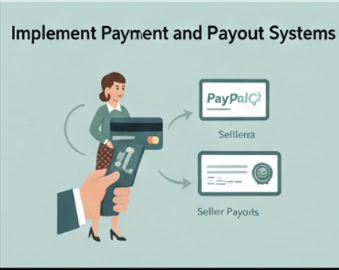
- Integrate payment processors like Stripe, PayPal, or Shopify Payments.
- Ensure consignors can get timely payouts.
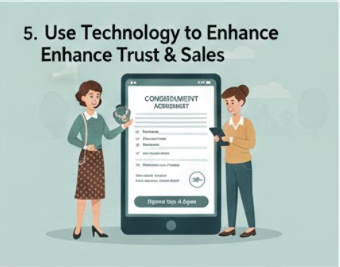
Step 5: Use Technology To Enhance Trust & Sales
- AR virtual try-on can increase buyer confidence.
- Blockchain authentication (for luxury items) ensures transparency.
- Track metrics like views, sales, and returns to improve performance over time.
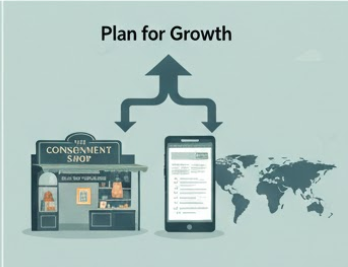
Step 6: Plan For Growth
- Start small but design systems to scale: more inventory, more consignors, more marketplaces.
- Eventually, integrate omnichannel tools, mobile apps, or pop ups if desired.
| “The next phase of consignment growth won’t be driven by thrift culture, it’ll be driven by systems that make secondhand feel as reliable as new retail.” |
The Technology Behind Online Consignment: That’s Where UltaHost Comes In
In a rapidly expanding online consignment market, the right hosting partner is key. Technology isn’t what drives a store, it’s simply the foundation that supports it. UltaHost gives you that technology.
The Importance Of UltaHost For Online Consignment
The challenges of running an online consignment store And how UltaHost solves those:
- Whether your store has 500 items today or 5,000 tomorrow, UltaHost automatically adjusts resources so your site never slows down.
- UltaHost’s powerful database systems handle thousands of items with detailed consignor info, pricing history, and inventory updates ensuring lightning-fast searches and responsive admin dashboards.
- During peak sales or promotions, UltaHost provides extra server power, keeping your store online and your customers happy.
UltaHost Keeps Your Store Secure
Safety is of utmost importance for all sensitive consignor and customer information. UltaHost delivers:
- SSL Certificates for safe connections
- DDoS Protection so your store remains inside during attacks
- Auto Backups, so you don’t lose inventory, pricing and sales data
- Your store stays safe with UltaHost and performs at it’s best.
| “Consignment stores stress databases more than typical online shops because every item carries ownership, timing, and payout logic. Hosting has to handle logic, not just traffic.” |
Expertise For E-Commerce Success
- UltaHost is not one of these generic hosts that doesn’t understand the consignment software or online store world.
- Professional hosting at a budget price, for business owners who want to save money but still have the best.
- UltaHost specialists can help with implementation, scaling and troubleshooting for your service so that you can focus on growing your business.
Successful consignment stores optimize for sell-through speed, not inventory size. Fast-moving items free up space, stabilize cash flow, and consistently outperform large catalogs filled with slow sellers.

Get Your Domain and Hosting the Right Way
Start with UltaHost reliable, easy-to-manage domain managment that fits your brand. With affordable hosting.
Conclusion
The consignment store model is about more than selling used goods, it’s a contemporary retail philosophy that values sustainability, mobility and community. It is a win-win business proposal where everyone wins. The consignors have low risk, entrepreneurs establish a good business and customers enjoy quality products for reasonable prices.
With reselling market booming, technology making operations more efficient and consumers ready to shop secondhand in a sustainable way, the time has never been better to join consignment. With this guide, you can succeed in the seller, buyer or entrepreneurial aspects of a burgeoning industry.
FAQs
Why do consignment stores inspect items instead of listing everything?
Consignment stores aren’t rejecting items arbitrarily; inspection protects both the seller and the store. Items that lack demand, are off-season, or show wear tend to sit unsold, tying up floor space and digital inventory. By filtering early, stores improve sell-through rates, which increases the chance that accepted items actually generate payouts.
How does online inventory syncing prevent lost sales?
Without real time syncing, an item can sell in store while still appearing online. That creates refunds, disappointed buyers, and broken trust. Cloud-based inventory systems remove items instantly across all channels, ensuring customers only see what’s actually available.
Can a consignment business scale without physical stores?
Yes. Online-first consignment stores scale faster because inventory, payments, and consignor accounts are managed digitally. Physical locations add credibility and walk-in traffic, but cloud-based systems allow growth without multiplying overhead costs
Why is fast hosting more important for consignment than regular e-commerce?
Consignment platforms don’t just load product pages, they constantly update pricing, ownership records, payout balances, and inventory status. Slow servers don’t just frustrate users; they can cause data mismatches that directly affect payments and trust.
What makes a consignment store successful long-term?
Consistency. Clear agreements, predictable payouts, transparent reporting, and reliable performance matter more than trend-chasing. Stores that invest early in systems and infrastructure build reputations that attract better consignors over time.


