



Optimizing a blog post involves several factors. Some of these factors are applied before and some are applied after publishing the blog. This article, however, will revolve around the steps that are taken before publishing a blog post.
We are going to discuss some of the important tips that can help you optimize your blog post before you publish it and create a beautiful blog. But first, let’s discuss what it means to optimize and how it is useful for your blogs.
What is Optimizing a Blog Post and What are its Benefits?
Optimizing a blog means crafting it in a way that fulfills the guidelines of the search engines. In simple words, there are a few things that you have to put in your blog to make it rank higher in the search engines.
These things include using good keywords, structuring your blog well, etc.
The benefit of optimizing your blog is that it helps your blog rank higher in search engine results. Moreover, it helps you provide quality content to your audience. Keeping these basic things in mind, let’s discuss the tips that can be helpful to optimize your blog before you publish it.
Tips for Optimizing the Blog Posts
These tips are discussed as follows:
Tip – 1: Use High-Quality Keywords

Keywords are phrases that Internet users put in search engines to look for relative information. Using high-quality keywords in your blog, such as those found through tools like Google Trends, can help you gain more traffic on your blog.
This means that when you use high-quality keywords that are trending among your audience, it is more likely that your audience will be attracted. You have to keep several factors in mind that can affect the quality of a Keyword before you use it in your blog.
This cannot be done manually. Although there are a lot of online tools that can be helpful for that. Google Analytics and Ahrefs are good examples of that. These tools allow you to analyze different aspects of a keyword so you can choose the one that is most suitable for your blog.
Tip – 2: Produce High-Quality Content
Using the right keywords is only one part of SEO. Search engines now prioritize content that is genuinely helpful, well-written, and created with the reader in mind. Instead of stuffing your article with keywords, focus on providing valuable information that answers users’ questions and solves their problems.
A high-quality blog has the following qualities:
- It provides valuable information.
- It solves the problems of readers.
- It has the potential to keep the audience engaged.
One of the best ways to improve readability is by using clear, concise language. Avoid overly complex sentences, jargon, and repetitive wording that can make your content difficult to follow. If you struggle to simplify your writing, paraphrasing tools can help refine sentence structure and improve clarity while preserving your original meaning.
Technology can provide some assistance in this case. There are many tools that you can use to paraphrase online and make your content simple and effective. These tools are designed to identify and replace words that make a blog less effective. They alter the wording and structure to make it more effective.


If you use AI writing tools during the drafting process, it’s also a good idea to review your content for authenticity before publishing. AI-generated text can sometimes sound repetitive or robotic, even when the information is accurate. A quick review helps ensure your blog maintains a natural tone and reflects your brand’s voice.
Tools like GPTZero, an AI detection tool, can help you check if content was written by a human or generated by AI. It’s useful for bloggers who work with freelance writers or want to make sure their content sounds authentic.
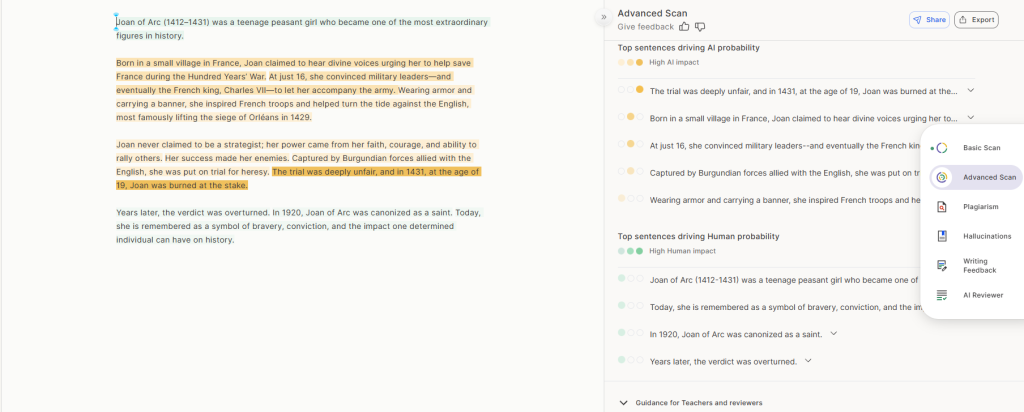
The tool works with text from ChatGPT, Claude, Gemini, and other popular AI models. It scans your text and highlights specific sentences that appear AI-generated. This makes it easier to see exactly which parts need editing. GPTZero is trusted by over 10 million users, including educators, publishers, and content creators.
The free version lets you check up to 10,000 words per month. For more usage, paid plans start at around $15 monthly. It’s a helpful tool for keeping your blog content genuine and avoiding that robotic tone that readers notice. If you want an additional way to review AI-generated content before publishing, IsThisAI can also help. It analyzes text to estimate whether it was likely written by AI or a human, giving bloggers another option to evaluate content and improve its natural, reader-friendly tone before going live.
Tip – 3: Make Sure That Your Blog Does Not Contain Plagiarism

Search engines discourage plagiarism. They tend not to rank the blogs that contain copied content. Not only that but you can face serious legal consequences if your plagiarism case is strong.
Besides worrying about ranking and the law, it is pretty unethical to copy someone else’s published content in your blogs. Moreover, it can harm the authority of your content and your value as a blog writer.
That is why your blog posts should be plagiarism-free. It applies to both intentional and unintentional plagiarism. But how can you make sure of that? Unfortunately, there is no manual way to determine if your blog post is plagiarized or not. You have to take the help of an online plagiarism checker to make your content more engaging and plagiarism-free.
These tools use different algorithms to detect the part of your blog that matches with some other content on the web. After you have identified these parts, simply remove, or change them to avoid plagiarism.
Tips – 4: Build a Well-Structured Blog
The structure of your blog affects its optimization more than you might think. The structure of the blog means how you design it to present your views. For example, if you have to write a blog about the benefits of eating fish, you will have to distribute it in sections.
The basic sections include the introduction, the body, and the conclusion of the blog. But what makes it more efficient is using the headers (H1, H2, H3…, etc.) to describe each section. There are 2 basic benefits of doing this and they are described below:
- It enables the search engine crawlers to identify that you have provided information in a well-structured way. After identifying this, they create a positive report about your blog and send it to the search engine. This positive response makes the search engine rank your blog higher in its results.
- It helps your audience navigate the blog easily. If you vaguely write the information, people will find it hard to understand your point of view. They will tend to skip reading the blog. This leads to less dwell time which affects your ranking negatively. Also, your audience will not come back to read your other blogs in the future.
Therefore, you have to make sure your blog is well-structured if you want it to get well-optimized before publishing.
Conclusion
Optimizing your blog according to the guidelines of search engines can impact its success to a great extent. Several strategies are applied before and after publishing the blog to optimize it.
In the information given above, we have provided 4 of the most important tips that you can use in order to make your blog optimized before you publish it.
Optimizing your blog posts before publishing is key to success. Consider Ultahost for web hosting, and let’s enhance your blogging experience together. Don’t miss out on the opportunity to take your blog to new heights with our reliable hosting solutions.