





When your website is new and just getting off the ground, practically any web hosting plan will be sufficient. But as traffic piles up, your business grows and you evolve, the wrong hosting plan can silently hold you back. Slow load times, inadvertent downtime, space limitations and poor customer service are just some of the common things that can detract from user experience, and profits.
Selecting the right hosting plan is not only a technical decision. It is a business decision. The great news is that you don’t even have to be a coder to intelligently choose! You just have to know what to go for and how to align a plan’s features with where your business is headed.
This guide will take you through each and everything to consider, from types of hosting to when it is time to make the move.
Key Takeaways
- Choosing a hosting solution is a business decision that will impact the speed, reliability, scalability and revenue potential of your website.
- Opt for a hosting that suits your growth-stage, beginning with shared and moving up to VPS or cloud according to your needs.
- Your website’s speed and Google search ranking are directly related to your hosting infrastructure.
- Security features such as SSL, backups, DDoS protection, and malware scanning should be standard items not upsells.
- A good hosting provider also provides easy resource upgrades without down time or migration issues.
- Beware of “unlimited” hosting claims, since these are frequently in the form of a hidden fair use policy
Not sure which hosting plan is right for your business?
Explore UltaHost’s full range of plans, built for speed, security, and real growth.
Begin Where You Are — and Where You’re Going
Before you start comparing plans, be clear about two things: what you need now, and how you expect your needs to change.
Ask yourself:
- What is my website’s current and projected traffic, both 6 months and 12 months from now?
- What type of website am I running, a blog, an online store, SaaS app or high-traffic portal?
- Do I have a team of developers that can support server themselves or do I need a fully hosted solution?
- What are my budget and scale requirements?
These questions aren’t just helpful, they’re pertinent. The small business owner building her portfolio site has drastically different needs than the expanding eCommerce brand processing hundreds of transactions each day. The hosting plan that best suits them will also look very different.
Understanding the Types of Hosting Plans
Not all hosting plans are the same. The market is divided in a number of categories that all adapt to a stage of growth or type of project.
Shared Hosting

Shared Hosting is the cheapest, best option for beginners. Your website will be on the same server as other websites. This is fine for sites with low traffic or relatively new blogs. As your traffic grows, though, shared resources can be limiting. Performance can also vary according to what other sites on the server are doing, a dynamic often referred to as the “noisy neighbor” effect.
VPS Hosting (Virtual Private Server)
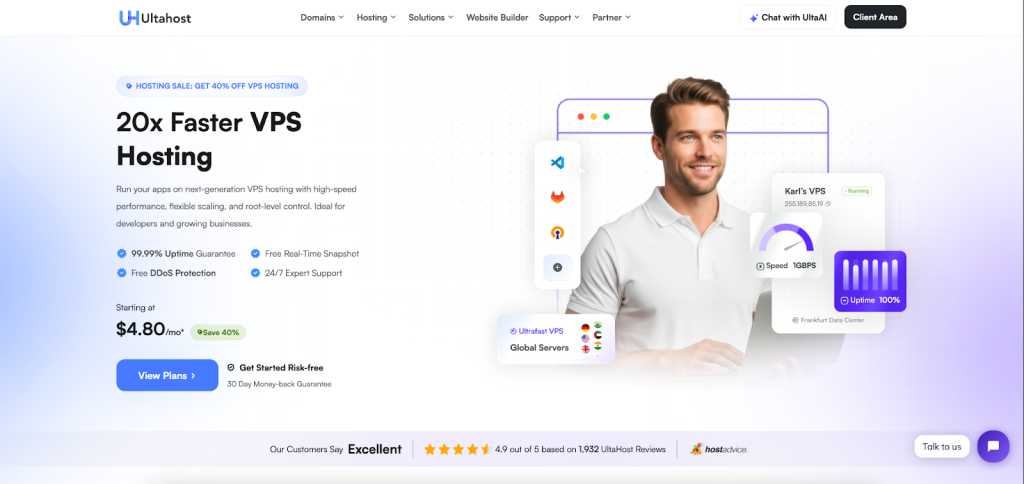
VPS Hosting is a happy compromise. You’re still going to have a physical server, but the resources are partitioned and allocated directly to your account. This means there will be more predictable performance, control over the platform and, they can install custom software. The VPS hosting is ideal for a small to medium-sized business that is growing and always wants more resources, because of their size but also not fully ready for the cost, or complexity, of dedicated server.
Dedicated Hosting
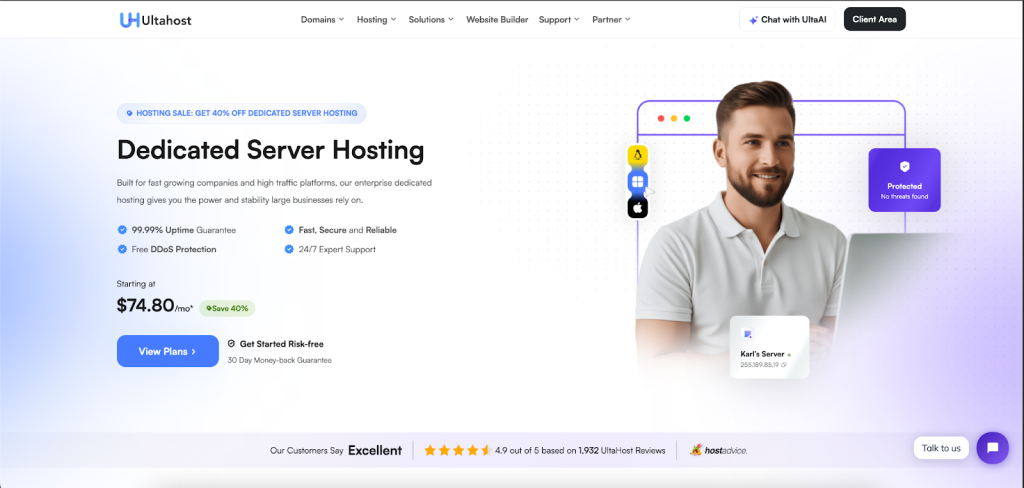
With Dedicated Hosting You get a whole physical server that is dedicated to your website. The is the most powerful/pricey solution, recommended for busy sites/ big e-commerce platforms / apps that required heavy resources. If security and/or performance are non negotiable, dedicated hosting is something worth considering if your site has tens of thousands of visitors per day.
Cloud Hosting
Cloud Hosting spreads your website across more than one server rather than just the one. This makes it easily scalable and reliable, if one server has a problem, another fills in smoothly. Cloud server hosting is ideal for organizations with varying traffic; it handles traffic spikes effectively, such as those which accompany sales or product launches.
Managed WordPress Hosting

Managed WordPress Hosting is a tailored hosting plan for the WordPress sites. The hosting provider takes care of software updates, security patches, backups, and optimization. If you are a business owner and prefer concentrating on content and growth rather than server management then this is an ideal option to go with.
| Your hosting plan should be reviewed every six months alongside your traffic data and business goals. What got you here will not always get you there. |
The Key Features to Evaluate
When you have an idea of the kind of hosting that will help you accomplish your goal, it’s time to compare features between plans that will help or limit your growth.
Uptime and Reliability
For every minute your site is offline, visitors cannot reach you, customers cannot purchase from you, and search engines are taking note. Opt for a hosting that promises 99.9% of uptime along with trustworthy Service Level Agreement. This is not debatable, for any business that relies on their website.
Speed and Performance
Site load time = site users’ experience + search engine ranking, period. Google has signaled that Core Web Vitals, including load time, interactivity and visual stability are ranking signals. When comparing hosting packages, consider frills such as SSD storage (which is much faster than HDD), a caching system and/or content delivery networks (CDNs), LSCache or NVMe-based storage driving your site, and support for PHP versions.
Scalability Options
The correct hosting plan for today should also show a clear growth path for tomorrow. Are you able to make the transition from shared hosting to VPS without having to transfer any data? Can you add resources, bandwidth, storage, processing power and RAM, as your traffic increases? Scalability is a not luxury, it is a necessity for a growth focused organization.
Security Features
A breach of data or an infection by malware can be devastating, financially and reputationally. You’ll want to keep an eye out for free SSL certificates, automated daily backups, DDoS protection or firewalls and malware scanning. For Immunos sites, make sure the hosting complies with Applicable Security Standards.
Customer Support
When things go wrong, and something inevitably does, you want help. Don’t simply determine if a host provides 24/7 support, but in what way (live chat, phone, ticket), how fast they respond to and resolve issues and whether or not they are technically competent. But shaddy support when you really need it can cost so much more than what you save on hosting.
Control Panel and Ease of Use
That is unless you have a team of geeks and can handle server maintenance & support yourself. cPanel and DirectAdmin are among the most popular GUIs with wide user base. Make sure the plan has an easy to use interface for creating and managing domains, databases, email accounts, and file uploads.
| Cheap hosting feels like a smart financial decision until the moment it is not. Downtime, a security breach, a slow site during a product launch — the damage from any one of these can far exceed whatever you saved on a discounted plan |
Aligning Your Hosting With The Growth Stage You’re At
The correct hosting plan will need to change as your business grows. Here is a rough guide to figuring out which plan fits your stage of growth.
Stage 1 — Early Stage: You are just starting. You don’t have much traffic, your budget is limited and you just need cheap reliable hosting. For this, shared hosting or one of the lower-tier VPS plans would be adequate. Concentrate on developing a solid foundation of good uptime and rudimentary security.
Stage 2 — Growth: Your traffic is consistently on the rise. You’ve got marketing you’re running, an email list you’re growing, or you’re building an online store. Performance matters more, and you might be experiencing slowness during traffic bursts. The next step up is VPS (for virtual private server), which includes “virtual” and addable resources for you to use instead of a single, physical machine that runs shared hosting accounts.
Stage 3 — Scaling: You now have a lot of traffic, often unpredictable. Perhaps you are handling sales, serving a customer database or have several websites. A managed dedicated server or cloud hosting will give the level of security, performance and flexibility you want.
Stage 4 — The Enterprise: You’ve got complex requirements, possibly multiple servers, your own configurations, and a team to mentor through the upkeep of all that infrastructure. Now, it makes sense to look for enterprise hosting solutions with dedicated infrastructure and superior support.
Red Flags to Watch Out For
Not all hosting services are worthy of your trust or your money. There are a couple of classic red flags to look for when analyzing plans.
Unlimited everything claims deserve security. When a host promises “unlimited bandwidth” and “unlimited storage” at ridiculously low cost, scrutinize the fine print.
These plans usually come with acceptable use policies that will throttle down (or shut off) the account consuming too many resources. There is no such thing as real unlimited hosting.
Generous renewal pricing is also suspect. Many hosts will draw you in with a super low starting price, only for the back end of your billing period to skyrocket. Make sure you check the renewal price before signing up, and factor that into your long-term budget.
The lack of transparency with regards to data center locations is more important than many purchasers know. Where you store your server can impact the time it takes for visitors to load up your site because of latency – the closer a server is to someone’s location, the faster your site will be loaded.
Choose a host that is transparent about where your data will be hosted and has options that coincide with the geography of your target audience.
Why UltaHost is the Best for Growing Businesses
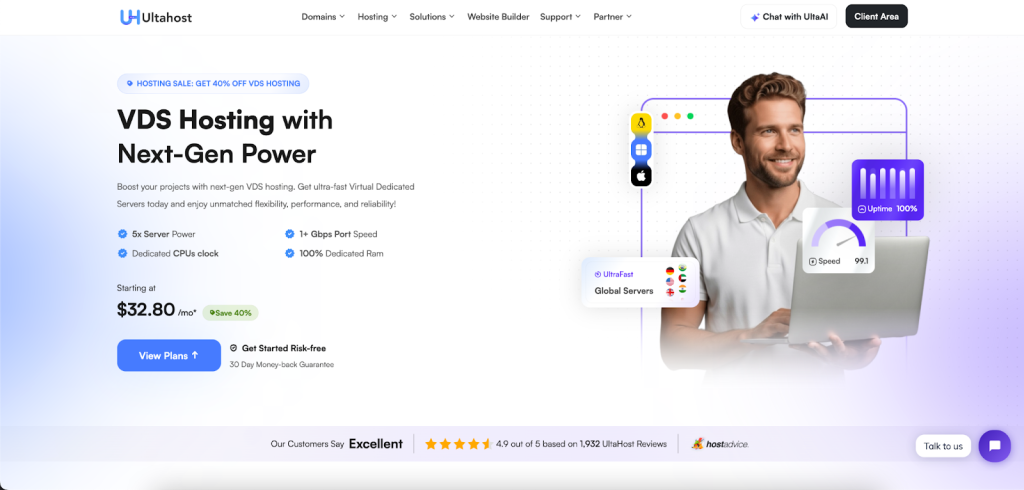
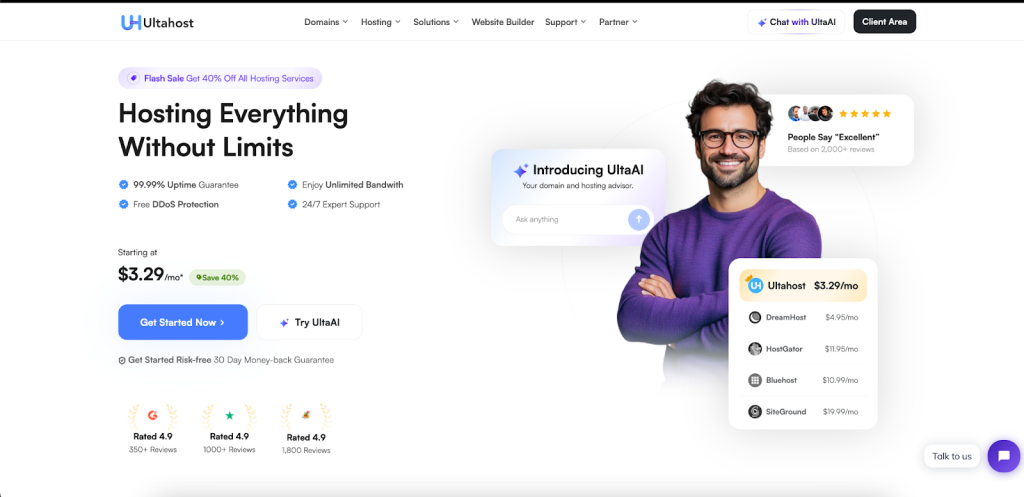
If growth is important to you, your host cannot be a commodity. UltaHost has become one of the most stable and growth encouraging hosting companies, which provide a range of plans that would cater to just any size of business.
What makes UltaHost unique is the premium quality of its infrastructure combined with a truly budget-friendly pricing. Whether you’re just getting your feet wet with shared hosting or stepping up to a high-performance NVMe VPS solution, UltaHost provides super-fast speeds thanks to NVMe SSD storage and LiteSpeed web servers, combined with a global CDN, features that many competitors only offer on premium plans.
Speaking of Security, UltaHost comes with a free SSL certificate and daily automatic backups users also get premium DDoS protection as well as firewall. And they’re not optional bolt-ons, they come integrated, so you don’t have to assemble a security stack yourself; you’ve got day one protection.
That’s where UltaHost really separates itself from the pack. They have 24/7 customer support with hosting experts that you can get on the phone, without having to read from a script, so you’ll get uncanned responses when you really need it. Paired with a 99.9% uptime guarantee and their user-friendly cPanel, you can confidently manage your website—even if you’re not the technical type.
Businesses who are scaling from shared to VPS, or from VPS to dedicated will appreciate that UltaHost can make the migration painless. You can change your plan at any time without interruption, and your data is preserved with no downtime. That sort of consistency is rare, and priceless when momentum is a factor.
Before You Go A Quick List
Before you sign up to a hosting plan, go through this list:
- Do they offer at least 99.9% uptime, with an SLA?
- Does it have SSD or NVMe storage to speed up load times?
- Is SSL, backups and DDoS protection included for free?
- Is there 24/7 fast live support with short response times?
- Is there an obvious and cost-effective upgrade path as you expand?
- How easy is the control panel for non-tech-savvy users?
- What are the renewal prices, and are they prominently displayed at the outset?
- Where are the data centers located, do they match your main audience?
If a hosting provider ticks all, or most of the boxes, for that matter, of these entries, it should be taken into serious consideration. If it fails to deliver on more than one of these points, move on. Hosting is the bedrock on which everything else depends. It is worth getting right.
One of the most common mistakes I see businesses make is treating hosting as a set-it-and-forget-it decision. They pick a plan when they launch, and they never revisit it — even when the site has tripled in size.

Already know your growth stage?
UltaHost has a plan built exactly for where you are, and where you are headed.
Conclusion
There’s no such thing as the “best” host. There is one that suits your situation the best, your growth aspiration and technical requirements. What’s most important is selecting a carrier that’s honest, reliable and can scale with you.
Begin with what you need today. Know what you will require tomorrow. And select a hosting environment that makes traveling between those two points as easy as possible. The right hosting plan should never cross your mind, it should just work, silently and reliably, so you can concentrate on building something amazing.
FAQs
When do I need to upgrade to a higher hosting level?
If your site is running slowly, down for long periods of time, or exceeding resource usage limits, that’s when to upgrade. Revisit your hosting every six months, and scale hand-in-hand with traffic.
VPS vs cloud hosting: what’s the difference?
VPS solutions: VPS will give you your own private resources to manage steady traffic for a lower price, and cloud hosting can scale on demand with varying amount of visitors. It depends on whether your traffic is predictable, or highly variable.
Does hosting affect Google rankings?
Yes, hosting affects page speed and Core Web Vitals (which are ranking factors). A sluggish host can silently kill your search exposure over time.
Is the transition to a new hosting plan hard?
Migrating is usually simple and often free with a good provider. If updates bring downtime or stress, your host might not support growth as effectively as needed.
How much should I spend on hosting?
Your web hosting budget should grow in line with the size of your site and how important it is. You can grow out of low-cost shared plans and move up to VPS or cloud options.
Which security features are essential?
Your plan needs to come with SSL, daily back ups, DDoS protection, a firewall, and malware scan. If these are added costs, beware.


